In heavy rain, choose the site before the shelter.
A perfect pitch in the wrong place can collect runoff, sit beneath a falling branch or become exposed to floodwater.
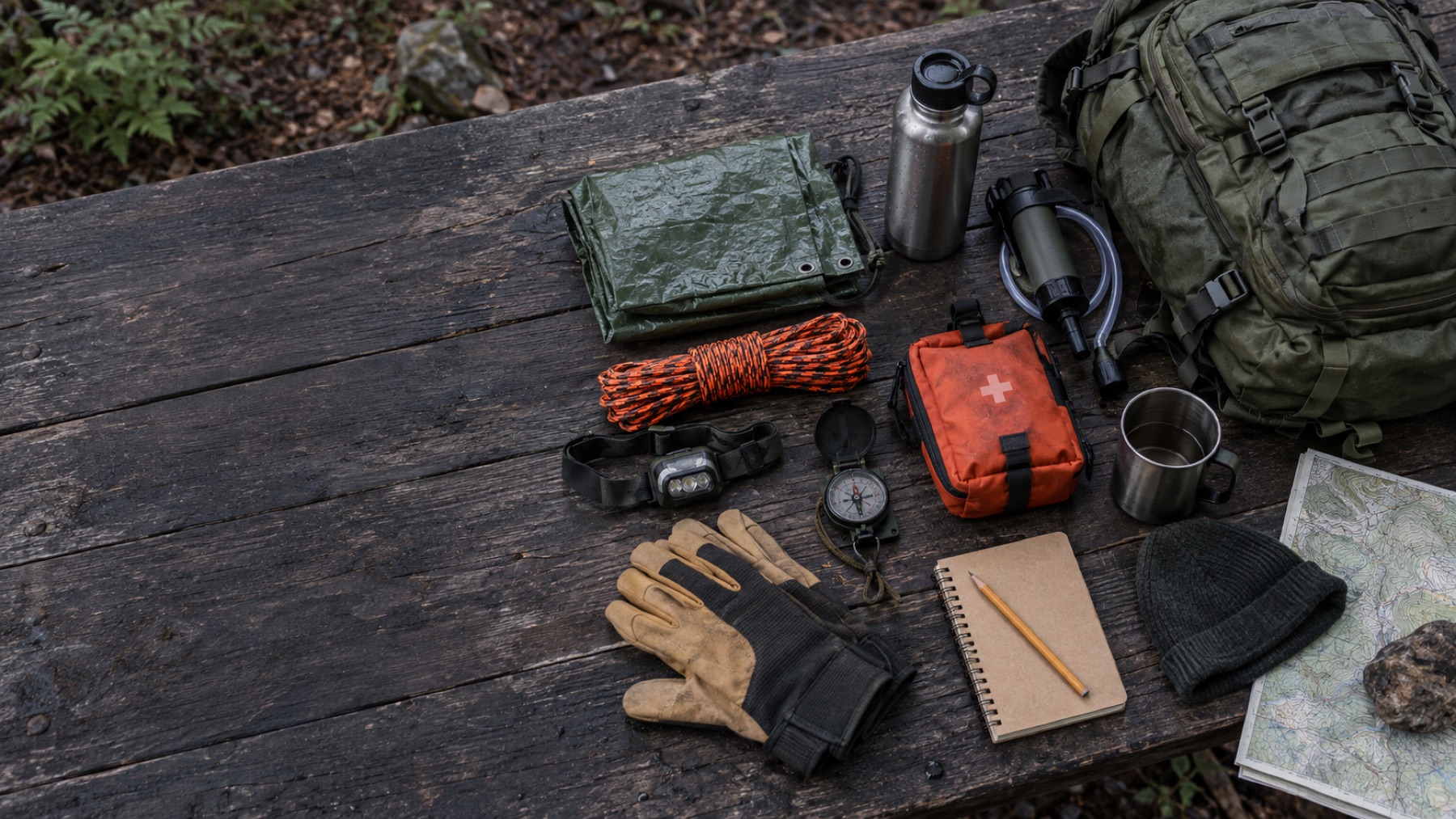
The five-minute screen
Pause before unpacking. The National Park Service advises checking for flash-flood, lightning and wind exposure, dead trees and branches, cliffs and ravines. A level site is useful, but avoid low ground where water can pool. In severe weather, a substantial building or hard-topped vehicle is safer than a temporary shelter when one is accessible.
| Look | Avoid | Prefer |
|---|---|---|
| Up | Dead limbs, leaning trees, loose rock. | Clear overhead space. |
| Down | Channels, depressions, saturated soil, exposed roots. | Durable, gently draining ground. |
| Out | Ravines, floodplains, cliff edges, isolated high points. | Sheltered terrain outside runoff paths. |
| Around | Unstable banks, roads, animal trails, fire rings. | Legal, low-impact space with a safe exit. |
Pitch for the actual weather
Orient the narrow or strongest side toward expected wind. Keep fabric taut enough to shed water without overstressing attachment points. Prevent the sleeping area from touching wet shelter walls, protect insulation from splash and ground moisture, and keep one dry layer reserved.
Do not trench around a shelter. It damages the site and often signals that the location was poor. If runoff starts moving through camp or water is rising, move early while visibility and footing are better.
Record the failure, not the story
Note wet entry points, cord that slips, stakes that fail, places where condensation touches insulation, and tasks that take too long. A small repair kit and practiced knots may improve an existing shelter more than buying another one.